Free Shipping Isn't Free: The Hidden Math Behind Your Delivery 'Perk'
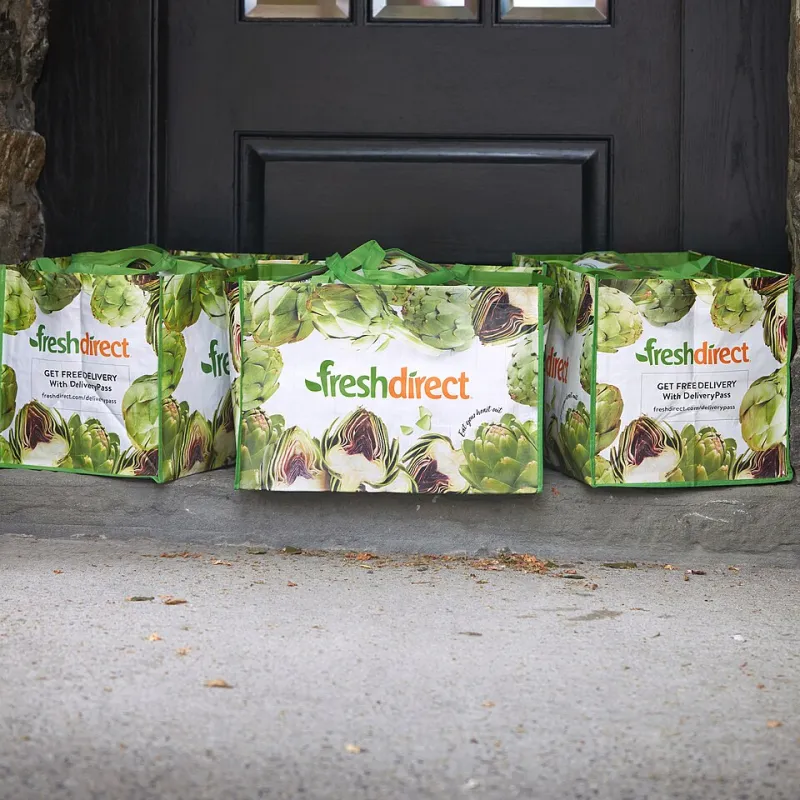
Photo: John J. Kelly III, CC BY-SA 4.0, via Wikimedia Commons
Let's be real for a second. When you see 'Free Shipping on Orders Over $35,' your brain registers it as a deal. A gift, almost. Like the retailer is doing you a solid. But here's the thing: no one in retail is doing anyone a solid. That shipping cost didn't disappear. It just moved somewhere you're less likely to notice.
Understanding where it went—and what it's actually costing you—can genuinely change how you shop.
The Price Is Already Padded
Retailers aren't charities, and logistics costs are very real. The average cost to fulfill and ship a single e-commerce order in the US sits somewhere between $8 and $15 depending on the carrier, package weight, and destination. Somebody's paying that. And it's almost never the retailer eating it entirely.
What happens instead is a practice called cost absorption into base price. Brands and retailers that offer free shipping as a standard feature tend to price their products slightly higher to offset fulfillment costs across the board. It's subtle enough that most shoppers never clock it, but it's consistent. You're not getting free shipping—you're pre-paying for it in the sticker price.
This is especially common in categories like home goods, electronics accessories, personal care, and apparel, where margins are flexible enough to hide a few extra dollars without triggering sticker shock.
The Free Shipping Threshold Is a Spending Trap
You've been there. You've got $27 worth of stuff in your cart and the site tells you you're '$8 away from free shipping.' So you browse around, find something you didn't need, spend $12 more, and congratulate yourself on saving on shipping.
Except you just spent $12 to avoid an $8 fee. That's not math that works in your favor.
Retailers set these thresholds deliberately. They're not random numbers—they're calculated to push average order values higher. According to various retail studies, free shipping thresholds reliably increase basket size by 30% or more. The retailer wins twice: they get bigger orders and they've conditioned you to feel like you're the one who came out ahead.
Next time you're hovering near a threshold, ask yourself honestly: would you buy that extra item if shipping cost $6.99 flat? If the answer is no, you're not saving money. You're spending it.
Local Pickup: The Option Retailers Don't Advertise Loudly
Here's where it gets interesting. Most major retailers—Target, Walmart, Best Buy, Home Depot, Lowe's, even many mid-size chains—offer in-store or curbside pickup for online orders. And in plenty of cases, the pickup price is the same as the shipped price. But sometimes it's actually lower.
Why would that be? A few reasons:
- Retailers save on fulfillment costs when you pick up in store. No carrier fees, no packaging labor, no last-mile logistics. Some pass a sliver of that back to you through exclusive pickup pricing or promotions.
- In-store inventory is sometimes priced differently than the online catalog. If a product is sitting in a warehouse 40 miles from you versus a store two miles from you, the cost to get it to you is wildly different, and some retailers reflect that.
- Pickup-exclusive discounts do exist. Best Buy and Target have both run promotions where choosing store pickup unlocks a lower price or a bonus reward. These deals rarely get shouted from the rooftops.
The catch, of course, is that pickup requires you to have a store nearby and the time to get there. That's a real trade-off. But for larger purchases—a TV, an appliance, furniture—the potential savings can be significant enough to make the trip worthwhile.
How to Actually Compare Shipped vs. Pickup Prices
This takes maybe three extra minutes and can save you real money. Here's a simple approach:
- Search the item on the retailer's site as normal. Note the price.
- Check if the item is available at a nearby store. Most retail sites show this on the product page.
- Switch your delivery option to store pickup and see if the price changes. Sometimes it does.
- Factor in your time and gas. If you're 25 miles away and it's a $14 item, the math probably doesn't work. If you're 3 miles away and it's a $200 item, do the pickup.
- Check for pickup-specific promotions. Retailers like Target will sometimes show a 'pickup discount' badge directly on the product listing.
For big-box stores especially, it's worth checking both options before defaulting to the shipped version.
When Free Shipping Actually Is a Good Deal
This isn't an argument that free shipping is always a scam. Sometimes it genuinely is the better move.
If you're ordering from a retailer that has no store presence near you—say, a specialty outdoor gear brand, a niche kitchen store, or a direct-to-consumer label—then shipped pricing is your only option and the free shipping threshold may actually save you a legitimate fee.
Similarly, for heavy or bulky items, having something delivered to your door can be worth a small price premium. Hauling a 60-pound bag of dog food from your car is a different calculation than picking up a phone case.
And for Amazon Prime members, the shipping cost is already baked into the membership fee—so 'free' shipping there is at least a fixed, predictable cost rather than a hidden variable.
The key is to stop treating free shipping as an automatic win and start treating it as a variable to evaluate.
The Bigger Picture
Retail pricing is a system, and every element of it is designed with the retailer's margins in mind—not your wallet. That's not cynical, it's just how business works. But once you understand the mechanics, you stop being a passive participant and start making decisions that actually reflect what things cost.
Free shipping is one of the most effective psychological tools in e-commerce because it frames a cost as a gift. The moment you start asking 'where did that cost actually go?', you'll shop differently. You'll compare pickup versus delivery. You'll stop padding your cart to hit a threshold. You'll notice when the in-store price is quietly lower than what you were about to pay online.
None of this is complicated. It just requires pausing for a second before you hit checkout. And more often than not, that pause is worth actual dollars.